Get the IHDS Research Digest delivered to your inbox!

Get the IHDS Research Digest delivered to your inbox!
Subscribe for data-driven stories from across India
Subscribe for data-driven stories from across India
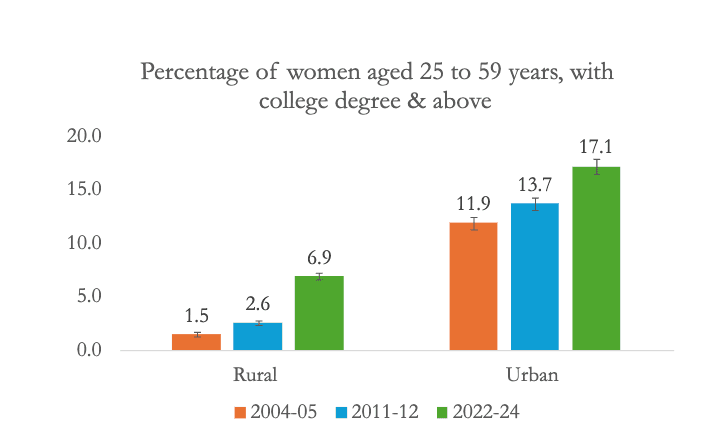
Among women aged 25-59, the share with a college degree has increased markedly in both rural and urban areas between 2004-05 and 2022-24. However, employment among female graduates has not kept pace, particularly in rural areas, highlighting a growing disconnect between rising educational attainment and work participation.
Among women aged 25-59, the share with a college degree has increased markedly in both rural and urban areas between 2004-05 and 2022-24. However, employment among female graduates has not kept pace, particularly in rural areas, highlighting a growing disconnect between rising educational attainment and work participation.
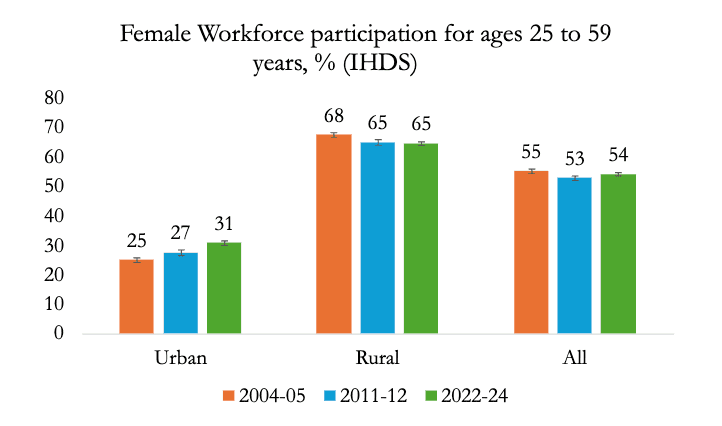
Female workforce participation shows limited change over time, with modest fluctuations across survey rounds. While IHDS estimates remain relatively stable, NSS/PLFS data indicate some decline followed by partial recovery. Rural participation remains higher than urban participation, suggesting persistent structural patterns alongside only marginal shifts in women’s workforce engagement.
Female workforce participation shows limited change over time, with modest fluctuations across survey rounds. While IHDS estimates remain relatively stable, NSS/PLFS data indicate some decline followed by partial recovery. Rural participation remains higher than urban participation, suggesting persistent structural patterns alongside only marginal shifts in women’s workforce engagement.
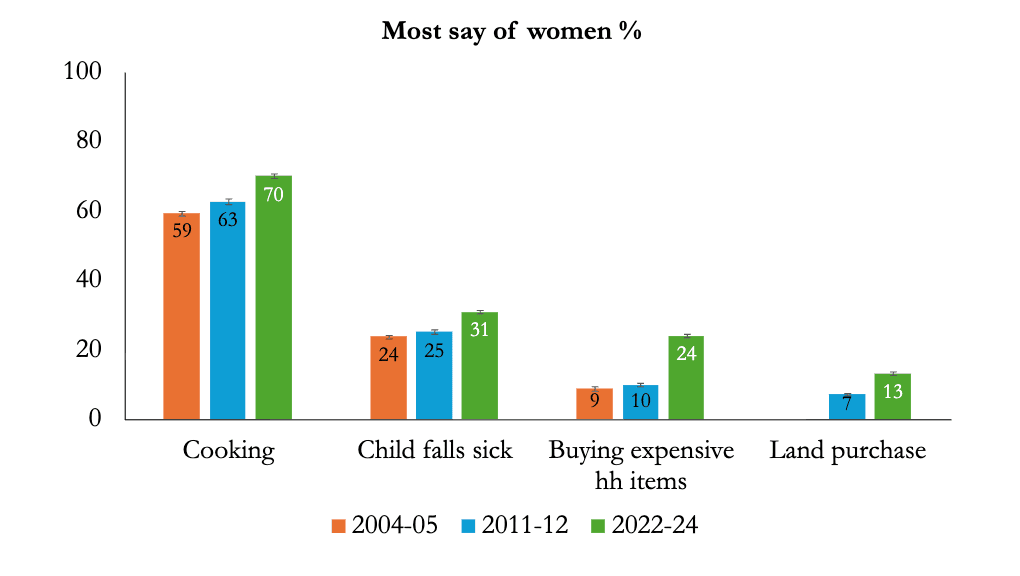
The proportion of women reporting that they have the most say in household decisions has increased across domains between 2004-05 and 2022-24. While gains extend beyond routine tasks, decision-making remains more limited in major expenditures, indicating gradual but domain-specific improvements in women’s agency within households.
The proportion of women reporting that they have the most say in household decisions has increased across domains between 2004-05 and 2022-24. While gains extend beyond routine tasks, decision-making remains more limited in major expenditures, indicating gradual but domain-specific improvements in women’s agency within households.
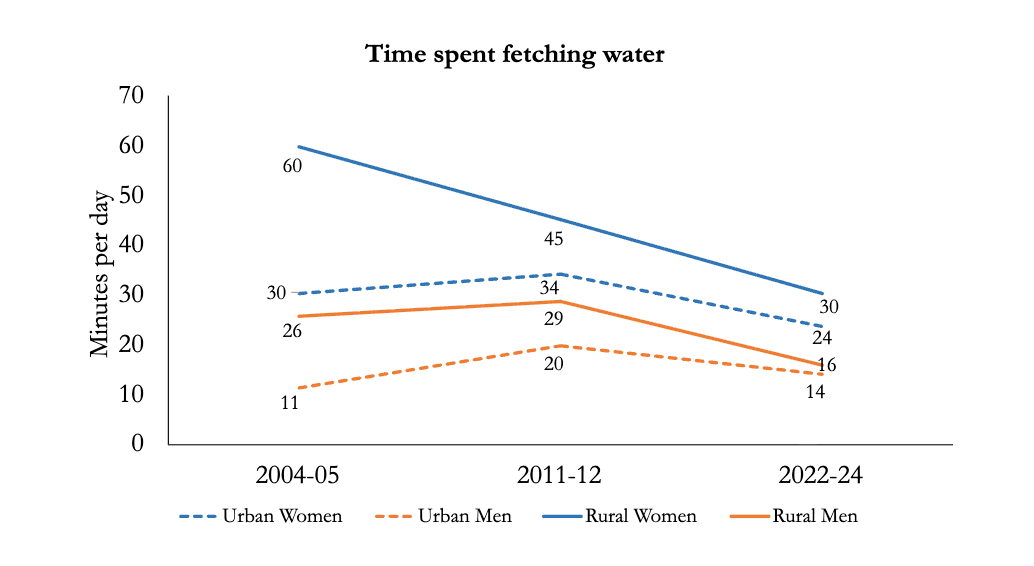
Time spent fetching water has declined overall between 2004-05 and 2022-24, particularly among rural women. While rural–urban and gender gaps persist, the reduction suggests improvements in water access, with the burden of water collection still disproportionately borne by women, showing a gradual easing over time.
Time spent fetching water has declined overall between 2004-05 and 2022-24, particularly among rural women. While rural–urban and gender gaps persist, the reduction suggests improvements in water access, with the burden of water collection still disproportionately borne by women, showing a gradual easing over time.
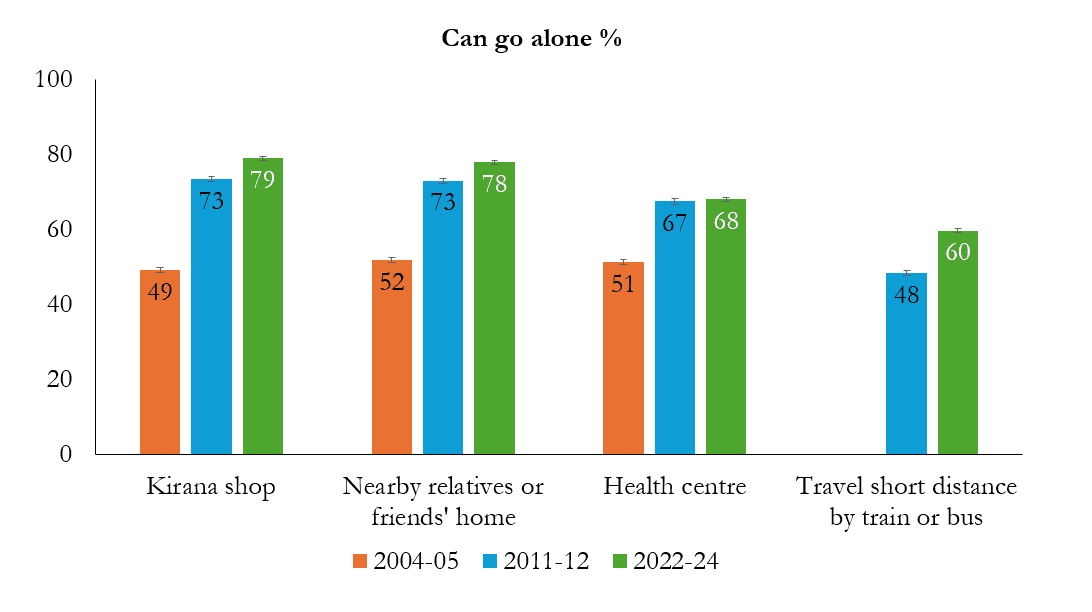
The percentage of women able to go alone to everyday destinations has increased substantially between 2004-05 and 2022-24. While mobility for routine local activities has improved, independent travel by public transport remains comparatively low, highlighting continued constraints alongside overall gains in women’s physical mobility.
The percentage of women able to go alone to everyday destinations has increased substantially between 2004-05 and 2022-24. While mobility for routine local activities has improved, independent travel by public transport remains comparatively low, highlighting continued constraints alongside overall gains in women’s physical mobility.
Among women aged 25-29, the percentage reporting living with daughters and receiving financial support from daughters in old age has increased across survey rounds, reflecting a growing acceptance of daughters as a source of intergenerational support.
Among women aged 25-29, the percentage reporting living with daughters and receiving financial support from daughters in old age has increased across survey rounds, reflecting a growing acceptance of daughters as a source of intergenerational support.
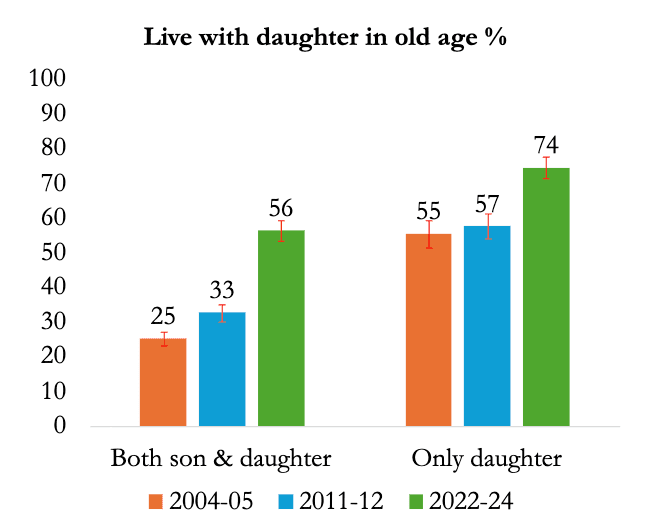
Among mothers aged 35-49, the proportion having only one child increased from 7% in 2004-05 to 11% in 2022-24. A concurrent rise in daughter-only families points to gradual shifts in fertility behaviour and gender composition, suggesting changing norms in family formation.
Among mothers aged 35-49, the proportion having only one child increased from 7% in 2004-05 to 11% in 2022-24. A concurrent rise in daughter-only families points to gradual shifts in fertility behaviour and gender composition, suggesting changing norms in family formation.
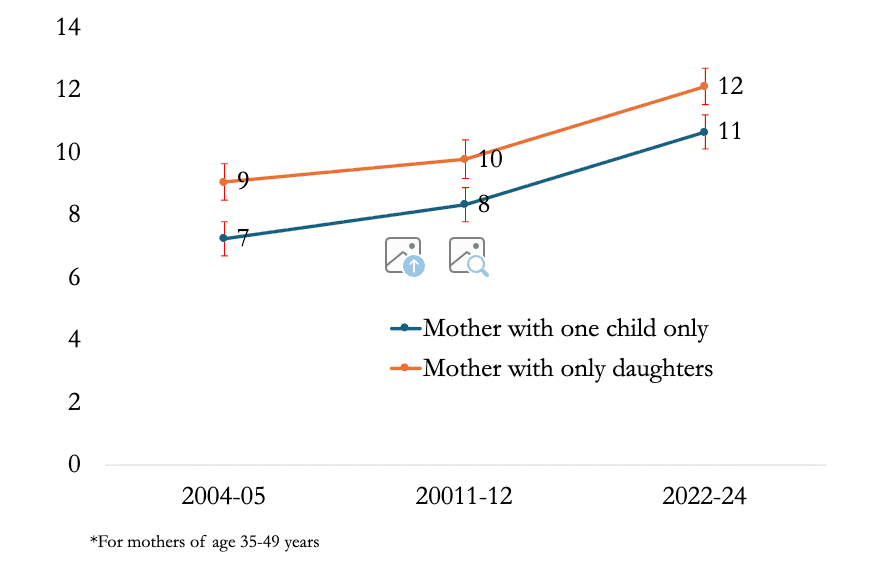
Among women aged 25-29, the proportion married to less-educated men has increased from 13% in 2004-05 to 27% in 2022-24. This pattern reflects rising female educational attainment and delayed marriage, suggesting a gradual shift away from traditional hypergamous (where women marry more-educated men) norms in marital matching.
Among women aged 25-29, the proportion married to less-educated men has increased from 13% in 2004-05 to 27% in 2022-24. This pattern reflects rising female educational attainment and delayed marriage, suggesting a gradual shift away from traditional hypergamous (where women marry more-educated men) norms in marital matching.
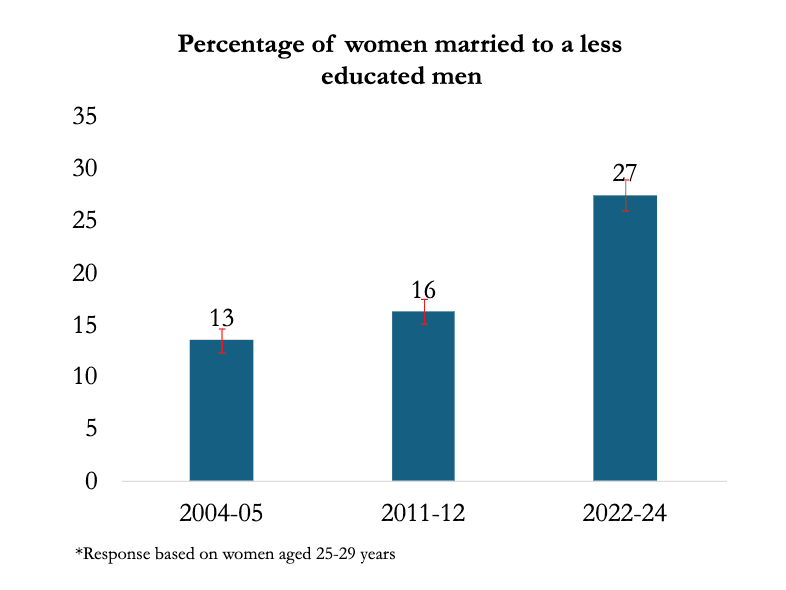
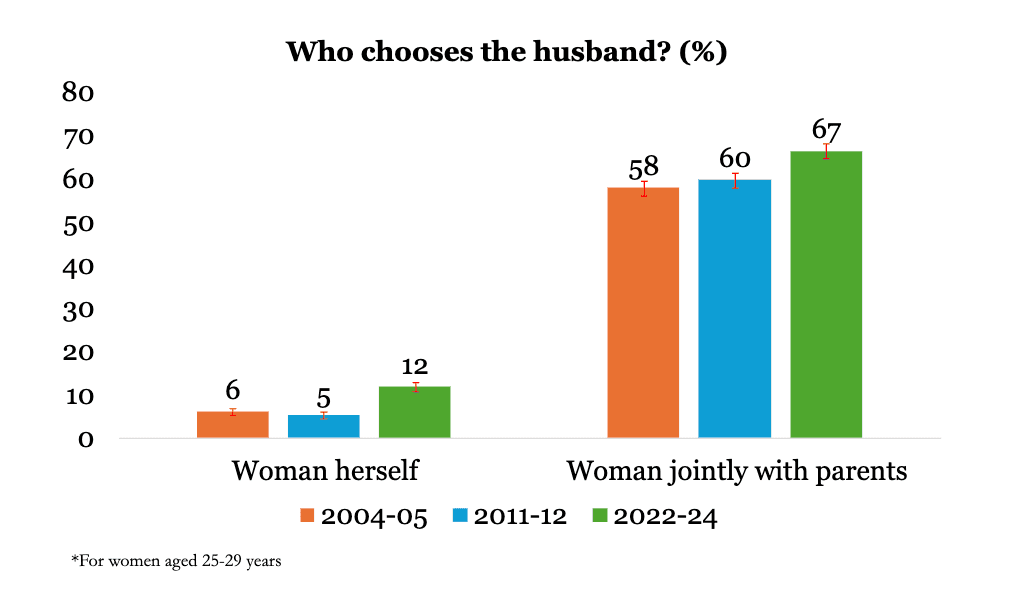
Among women aged 25-29, agency in partner choice has increased over time. The share of women choosing their husband independently has risen, while joint decision-making with parents remains the dominant pattern and has also shown a steady increase between 2004-05 and 2022-24.
Among women aged 25-29, agency in partner choice has increased over time. The share of women choosing their husband independently has risen, while joint decision-making with parents remains the dominant pattern and has also shown a steady increase between 2004-05 and 2022-24.
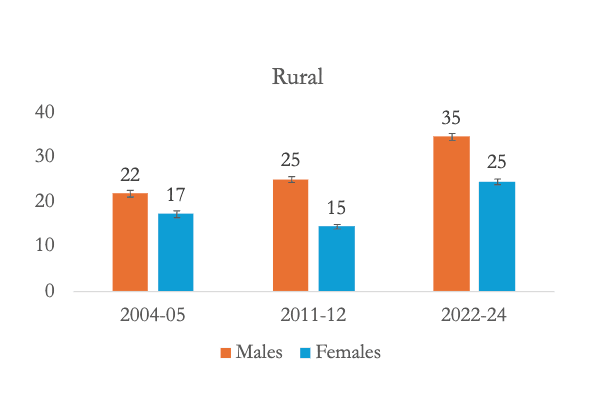
Between 2004-05 and 2022-24, STEM enrolment among ages 18-25 increased for both males and females. However, the gender gap widened in rural areas, driven by faster gains among males, while in urban areas the gap narrowed steadily, reflecting relatively greater improvements in female participation.
Between 2004-05 and 2022-24, STEM enrolment among ages 18-25 increased for both males and females. However, the gender gap widened in rural areas, driven by faster gains among males, while in urban areas the gap narrowed steadily, reflecting relatively greater improvements in female participation.